
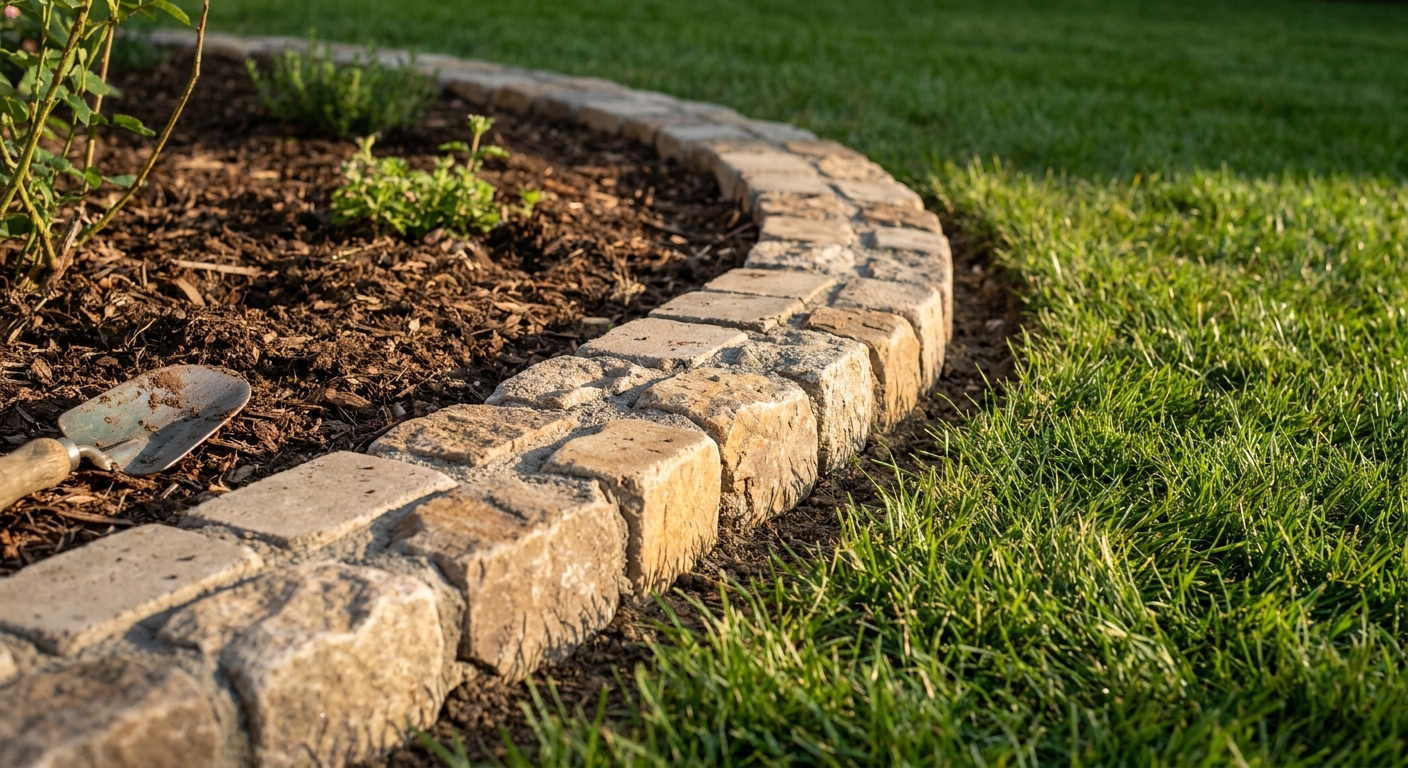

Concrete cobble edging stands as the most effective barrier against aggressive, rhizome-spreading grass species like Kikuyu and Buffalo. These resilient grasses utilize lateral underground runners—known as rhizomes—that easily bypass shallow plastic or timber borders. By installing a deep, continuous concrete edge with a minimum 150mm trench depth, we create a heavy, impenetrable physical blockage. This containment method ensures garden beds remain pristine without constant manual trimming or chemical intervention.
Comparison of Garden Edging Materials
Selecting the right material is a choice between temporary aesthetics and permanent structural containment. We have evaluated the most common options based on our field experience and established industry standards:
| Material | Depth | Lifespan | Grass Control |
|---|---|---|---|
| Concrete | 150mm+ | 20+ Years | Excellent |
| Plastic | 50-80mm | 2-5 Years | Poor |
| Timber | 80-100mm | 3-7 Years | Moderate |
| Metal | 100mm | 10+ Years | Good |
Why Does Concrete Stop Grass Roots Better Than Plastic?
Concrete cobbles stop root migration through sheer density and vertical mass. Unlike flexible materials, concrete maintains its position against the hydraulic pressure of wet soil, which often causes lighter borders to heave or shift during heavy seasonal rains. This stability is critical; as noted by agricultural extension research regarding Pennisetum clandestinum (Kikuyu), once a gap opens even slightly, rhizomes will exploit it to colonize new soil.
To ensure a total barrier, our installation process mandates a minimum depth of 100mm to intercept deep lateral root growth and the use of a continuous grout seal to prevent stolon migration through micro-fissures.
Thermal Stability and Long-Term Durability
One of the hidden failure points in garden edging is thermal expansion. Metal borders often conduct heat, which can stress delicate root systems in flower beds, creating a dry zone where gaps form between the soil and the barrier. Concrete offers neutral thermal mass, maintaining consistent soil contact throughout the year. This prevents the formation of the small, dry pockets that grass seeds and weeds use as opportunistic entry points.
Why Traditional Edging Fails
Many residential borders fail because they prioritize aesthetic simplicity over mechanical function. Using materials that degrade under intense UV exposure—such as thin plastic—results in total barrier failure within two years. Failure typically manifests in three ways:
- Gap Formation: Modular units without a continuous mortar bond allow roots to tunnel through.
- Height Inconsistency: Profiles that sit too low allow surface stolons to “jump” the border.
- Heaving: Lightweight components lack the mass to withstand soil expansion during wet cycles, causing the barrier to tilt.
To prevent these issues, we follow strict excavation standards: we trench to a depth of 150mm and backfill with compacted substrate to eliminate air pockets, ensuring the structural integrity of the line. Our standard installation procedures verify these depth requirements before any concrete is poured.
If you are looking for a permanent way to manage aggressive turf and reduce your weekly maintenance, pleasereach out to our team today for a professional assessment of your landscape.
FAQ's
What is the best garden border to stop grass from spreading?
A deep-set concrete cobble border is widely considered the gold standard. Because of its weight, depth, and ability to be installed with a continuous mortar seal, it provides the only true physical blockade against the deep-reaching rhizomes of invasive grasses like Kikuyu.
Does Kikuyu grass grow under concrete?
It can bypass concrete if the footer is too shallow. Horticultural studies suggest that to effectively block established Kikuyu rhizomes, an edge must extend at least 100mm below the surface.
How high should garden edging be?
We recommend a height of 20mm to 50mm above the finished soil level. This allows for clean mower navigation while providing a physical vertical wall that prevents grass runners from jumping into your planting beds. You can see examples of this height profile in our completed landscape projects.
Is concrete better than plastic edging?
Yes. Concrete is superior because it resists UV degradation, provides necessary structural weight, and creates a permanent seal. Plastic often buckles under the pressure of expanding soil, whereas concrete maintains its integrity for decades.
Will this stop weeds as well?
While the physical barrier prevents lateral grass spread, it cannot stop wind-blown seeds. However, the concrete edge creates a clean line that makes it significantly easier to maintain your beds, as you can run a trimmer along the cobble without damaging your feature plants, a cornerstone of our maintenance-free landscaping techniques.