
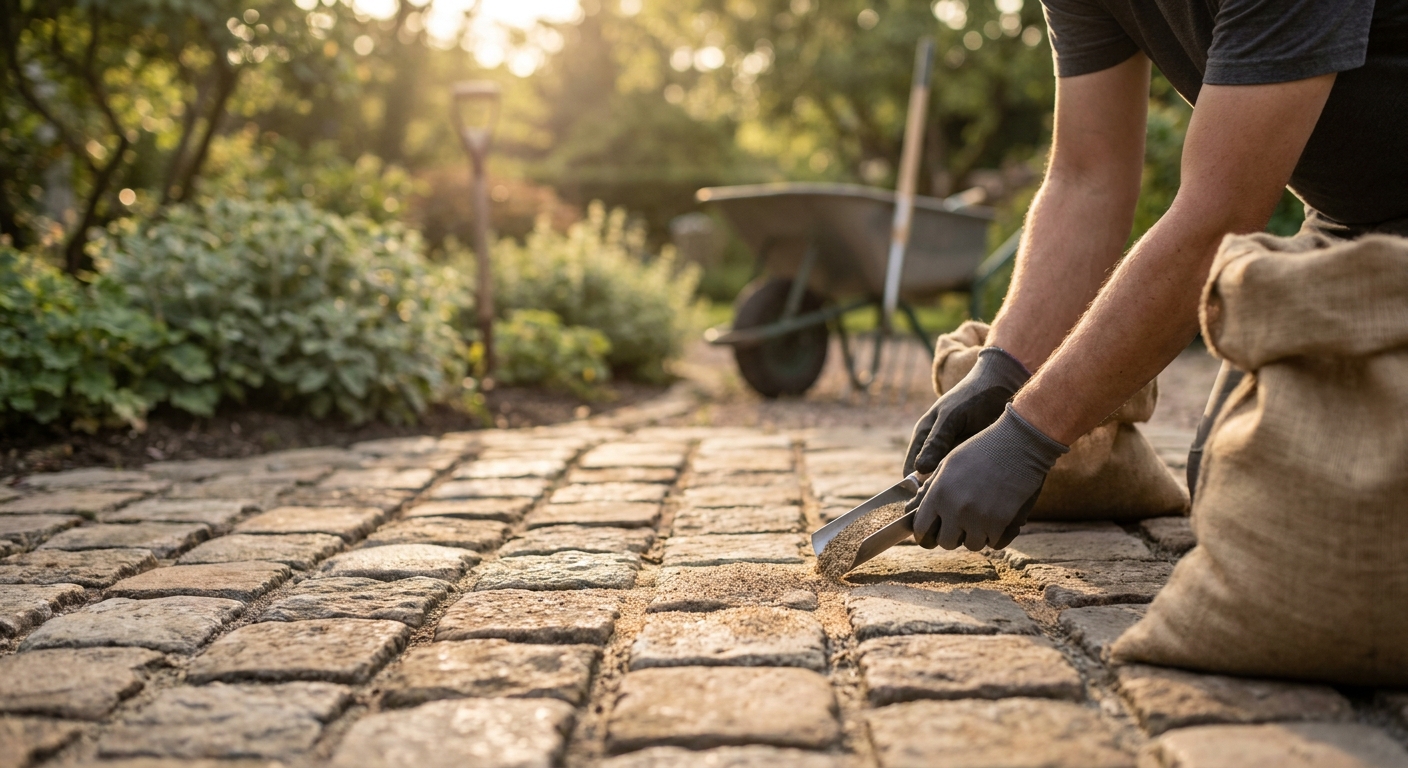

To stop grass from growing between driveway cobbles, replace traditional jointing sand with a stabilised polymeric sand or high-strength resin mortar. These materials harden to create a physical barrier that prevents wind-blown seeds from germinating while resisting the erosion caused by rainfall. For long-term success, you must mechanically extract existing root systems and treat the substrate to neutralise aggressive rhizomes before applying your chosen sealant.
How to stop grass growing between driveway cobbles
Grass thrives when organic debris accumulates in the voids between paving stones. Because standard sand is permeable, it provides the perfect environment for seeds to germinate and for deep-rooted grasses to push upward. To eliminate this issue, we follow a rigorous installation process that adheres to Interlocking Concrete Pavement Institute (ICPI) standards for sub-base compaction and joint stabilisation.
| Problem | Root Cause | Recommended Fix |
|---|---|---|
| Surface weed growth | Wind-blown seeds in sand voids | Polymeric sand or resin mortar |
| Deep-rooted grass encroachment | Rhizomes migrating from the soil base | Geotextile fabric installation |
| Sunken or loose cobbles | Inadequate base compaction | Sub-base reconstruction (95% Mod AASHTO) |
Sub-Base and Membrane Requirements
Vegetation often originates from beneath the cobbles. Aggressive species use underground runners to find moisture through gaps in the driveway base. A failing sub-base typically indicates a lack of geotextile separation or inadequate compaction. We recommend using a heavy-duty geotextile fabric with a minimum rating of 150 GSM to create a permanent barrier against upward root migration. When installed correctly, this layer allows for proper drainage while preventing the mixing of soil and sub-base aggregates.
For optimal results, ensure your joint depth is consistently maintained between 3mm and 5mm. If you are struggling with recurring growth, check out our guide on long-term paving maintenance to learn how to keep your joints sealed against the elements.
Maintenance and Chemical Protocols
Even with hardened joints, surface maintenance is required to prevent silt accumulation. We recommend biannual high-pressure cleaning, followed by the re-application of a UV-stable sealant every 3 to 5 years to maintain the integrity of the surface. If you require assistance with professional-grade driveway restoration, we invite you to explore our specialised repair services.
Take Back Control of Your Driveway-Say Goodbye to Weeds for Good
Tired of spending weekends pulling stubborn grass and weeds from your driveway joints? Left unchecked, roots don’t just ruin your driveway’s appearance; they expand, loosen your cobbles, and erode the stabilizing sand underneath.
Installing a permanent barrier like Garden Cobble Edging locks your driveway border in place, prevents surrounding turf from creeping into joints, and protects polymeric sand from washing away. Contact our team today using the button below.
FAQs
Does vinegar kill grass between driveway cobbles?
Vinegar is a contact herbicide that burns the foliage but fails to destroy the root system of established weeds. It is not an effective long-term solution for preventing regrowth in driveway joints.
Why does grass keep returning after jet washing?
Jet washing often strips the jointing sand out from between the cobbles, creating deeper, empty voids that trap moisture and organic matter. Unless the voids are filled with a stabilised, binding material immediately after cleaning, they become prime territory for new weed growth.
Is salt an effective weed killer for driveways?
No. While salt dehydrates plants, it is detrimental to concrete cobbles and can leach into your surrounding landscape, poisoning the soil for other plants. It is not a sustainable or recommended method for driveway maintenance.
How long does polymeric sand last in our climate?
When properly installed by our technicians, quality polymeric sand typically lasts between 5 and 10 years. In high-exposure environments, we recommend a binder top-up every few years to maintain the structural seal.