
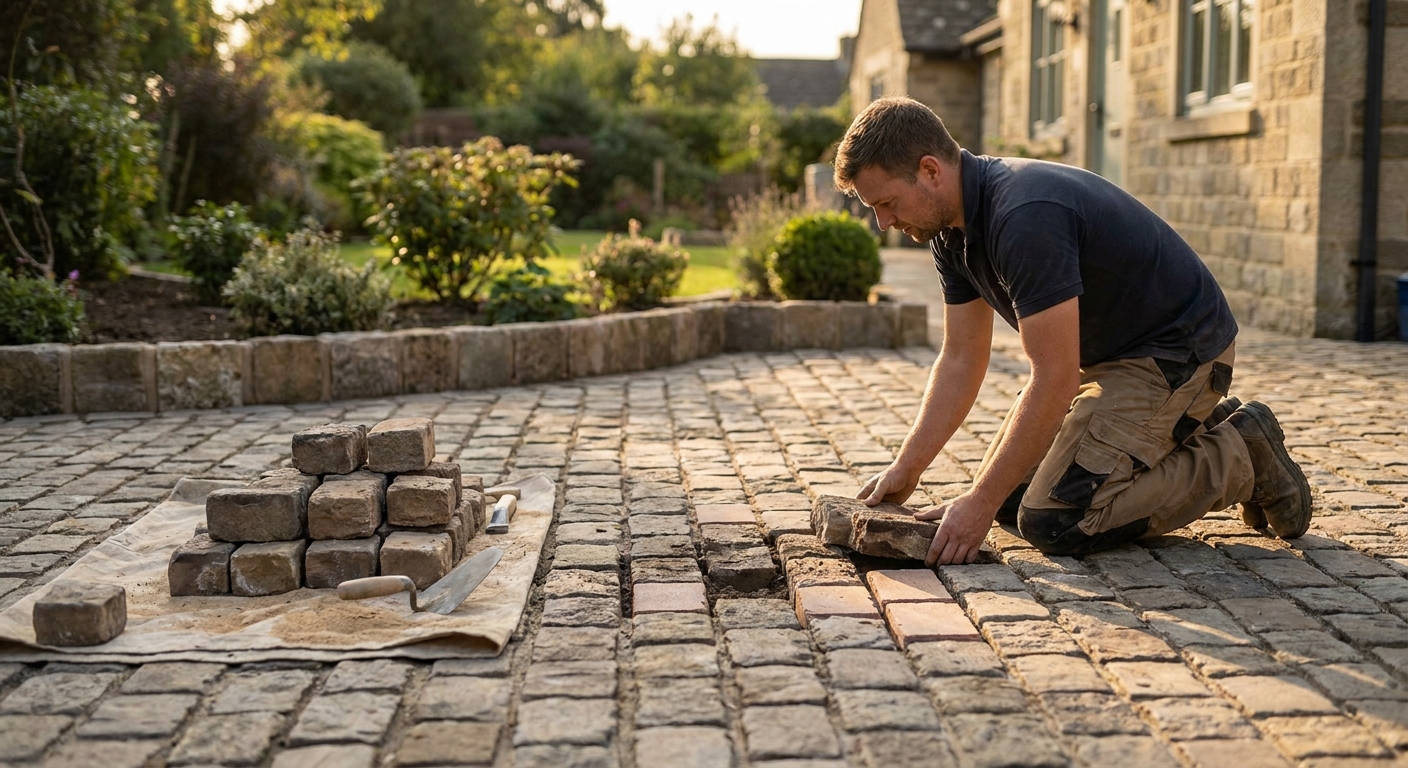

Repairing driveway paving sections without full replacement is a highly effective, cost-efficient process that involves isolating damaged zones, re-compacting the underlying sub-base, and reinstating existing pavers to restore structural integrity. This targeted intervention is a viable, long-term solution when the failure is localized and the remaining driveway surface retains its structural load-bearing capacity.
Step-by-Step Paving Repair Procedure
Following industry-recognized compaction standards (such as those outlined in SANS paving guidelines), we execute the repair using the following technical sequence to ensure lasting stability:
| Step | Action |
|---|---|
| 1. Extraction | Remove damaged pavers and clear the area 500mm beyond the failure zone. |
| 2. Remediation | Expose the subgrade and use a mechanical plate compactor to reach optimal density. |
| 3. Bedding | Lay 25–30mm of washed river sand; maintain uniform thickness to prevent future rutting. |
| 4. Installation | Reinstate paver units, ensuring they lock firmly into the surrounding surface. |
| 5. Finishing | Seal joints with high-silica or polymer-based sand to lock units and prevent water ingress. |
Why Does Driveway Paving Sink or Shift?
Paving systems typically fail when the sub-base loses its load-bearing capacity due to water ingress or poor initial compaction. In South Africa, intense summer downpours often wash out jointing sand, leading to unit movement and eventual structural collapse. By addressing these mechanics early, we prevent the “domino effect” of localized failure that often leads to a complete driveway rebuild.
Common failure triggers include:
- Sub-base subsidence resulting from leaking underground municipal pipes.
- Lateral movement caused by inadequate or failing edge restraints.
- Surface deformation under concentrated axle loads from heavy vehicles.
The Subgrade Remediation Process
Technical repair requires more than just swapping stones. Once the damaged section is cleared, the exposed soil must be re-compacted to reach strict density requirements, as verified by our technical quality standards. This prevents the new section from sinking again under the weight of a vehicle. We maintain a bedding sand thickness of 25mm to 30mm; any deviation from this standard compromises the interlocking capability of the concrete units.
Integrating New Sections With Existing Surfaces
Achieving a seamless finish is a primary concern for our clients. Because of UV fading and batch variations, we often harvest pavers from less visible areas of your property to integrate into the primary repair zone. This technique ensures that the most prominent sections of your driveway maintain a uniform aesthetic. If you are experiencing repeated perimeter movement, our professional paving repair services can provide the necessary structural reinforcement to stop the cycle of sinking.
Restore Your Driveway’s Strength Without Spending a Fortune
Sunken, loose, or damaged blocks don’t mean you need an expensive, total driveway overhaul. Targeting and repairing isolated sections can bring your driveway back to life at a fraction of the cost; if you secure the perimeter. Without reinforced edge constraints like Garden Cobble Edging, freshly repaired patches will quickly shift and sink right back into the ground under vehicle weight.
Installing heavy-duty cobble edging around your repaired sections locks the sub-base firmly in place, seals out water ingress, and ensures your patch repair blends seamlessly with the rest of your home’s exterior. Contact our team today using the button below.
FAQs
Will the patched section be visible?
New pavers rarely match the exact patina of weather-worn stones immediately, though the contrast fades significantly over several months of environmental exposure.
How long does a paving repair take?
Most localized repairs are completed within six to eight hours, excluding the drying time required for any wet-mix concrete haunching or structural edging.
Can I drive on the repaired section immediately?
You can walk on the surface instantly; however, heavy vehicles should avoid the section for at least 24 hours to allow the jointing sand to settle and properly lock the units together.
Why did my driveway paving sink?
Sinking usually indicates a failure in the sub-base material or a lack of proper drainage, allowing water to liquefy the foundation layers directly under the pavers.
Structural Reinforcement with Garden Cobble Edging
For driveways prone to lateral shifting, we recommend our specialized Garden Cobble Edging. These high-strength concrete solutions act as a structural anchor, stabilizing the driveway perimeter against washout and movement during extreme weather cycles. By installing a concrete haunching and reinforcing the edges, we provide a permanent containment solution that protects your investment.