
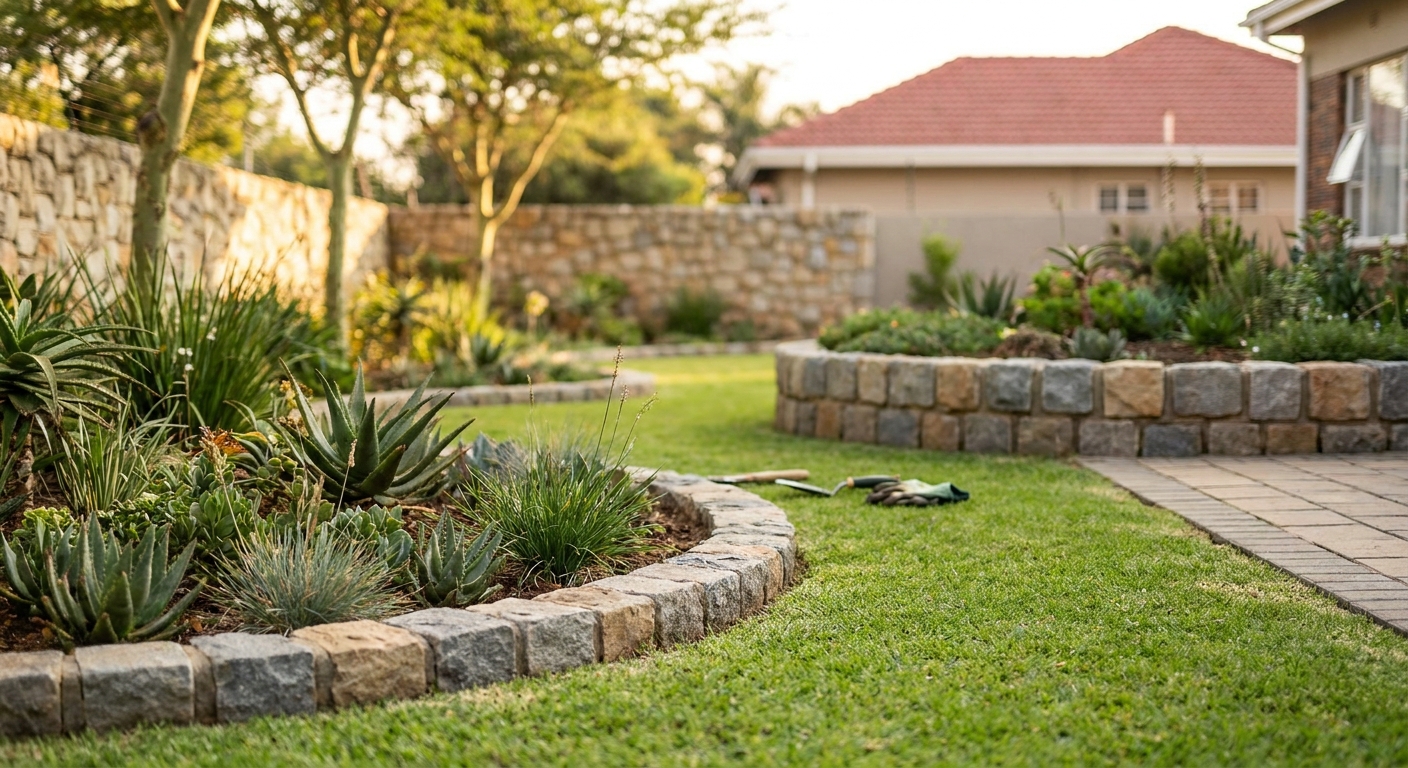

Effective garden edging in Johannesburg contains invasive lawn grasses like Kikuyu and prevents soil erosion during heavy Highveld rains. Its primary function is to create a durable, clear separation between your lawn and garden beds, which protects plant roots and simplifies maintenance. The right installation method is essential for longevity in our clay-rich soils.
Identifying Failing Garden Edging
When garden edging is improperly installed or uses unsuitable materials, the signs of failure become apparent quite quickly. This compromises not only the appearance of your garden beds but also their structural integrity, leading to ongoing maintenance issues. You are likely dealing with failing edging if you notice the following issues:
- Grass runners persistently crossing from the lawn into your flowerbeds.
- Visible soil and mulch washing onto pathways after watering or rain.
- Edging sections that are cracked, shifting, or heaving out of the ground.
- Difficulty mowing along the lawn’s border without damaging the edging or your mower.
The Root Cause of Edging Problems in Johannesburg
The primary cause of shifting and failing garden edging in this region is the expansive nature of our clay soil, which swells when wet and shrinks as it dries. This constant movement exerts immense pressure on any shallowly installed border. Without a proper concrete foundation, the edging will inevitably lift and become unstable over time.
The Impact of Highveld Summer Storms
Johannesburg’s intense summer thunderstorms cause significant water runoff in a short period. Poorly installed edging cannot effectively channel this water or prevent topsoil erosion. A professional installation considers water flow and ground saturation, ensuring the edging remains a stable barrier rather than an obstacle that gets washed away.
Professional Solutions and Long-Term Prevention
Our teams at Garden Cobble Edging ensure a permanent solution by focusing on ground preparation and foundation. We don’t just place the edging on the surface; we create a stable, lasting installation designed to withstand Johannesburg’s specific environmental conditions. Our certified process involves several key steps:
- Excavating a proper trench to the correct depth to block grass root systems.
- Laying a solid concrete foundation to prevent shifting and subsidence from soil movement.
- Setting the cobbles or edging material perfectly level and securing them within the concrete footing.
- Backfilling correctly to ensure soil stability on both sides of the new border.
Get a Quote with Garden Cobble Edging
Our operations teams are fully equipped to install permanent garden edging that resolves these common issues. We work to strict residential property care standards to protect your investment and prevent future maintenance headaches. Ignoring failing edging often leads to recurring costs and effort in weeding and replenishing eroded soil. Get a quote or request a call-out using the button below.
FAQs
What is the best garden edging material for Johannesburg’s climate?
We recommend concrete cobble and steel edging for their durability. Both materials are highly resistant to the intense UV exposure and heavy rains typical of the Highveld climate. They do not warp, crack, or degrade like plastic or thin wooden alternatives.
How deep does edging need to be to stop Kikuyu grass?
To create an effective root barrier against aggressive runner grasses like Kikuyu, the edging should be installed to a depth of at least 10 to 15 centimetres below the surface. This, combined with a solid foundation, stops the roots from travelling underneath and into your garden beds.
Can garden edging help manage water runoff?
Yes, correctly installed edging acts as a small retaining wall that can direct the flow of surface water during heavy rain. This prevents topsoil and mulch from washing away, reduces waterlogging in certain areas, and protects the structural integrity of your pathways and beds.