
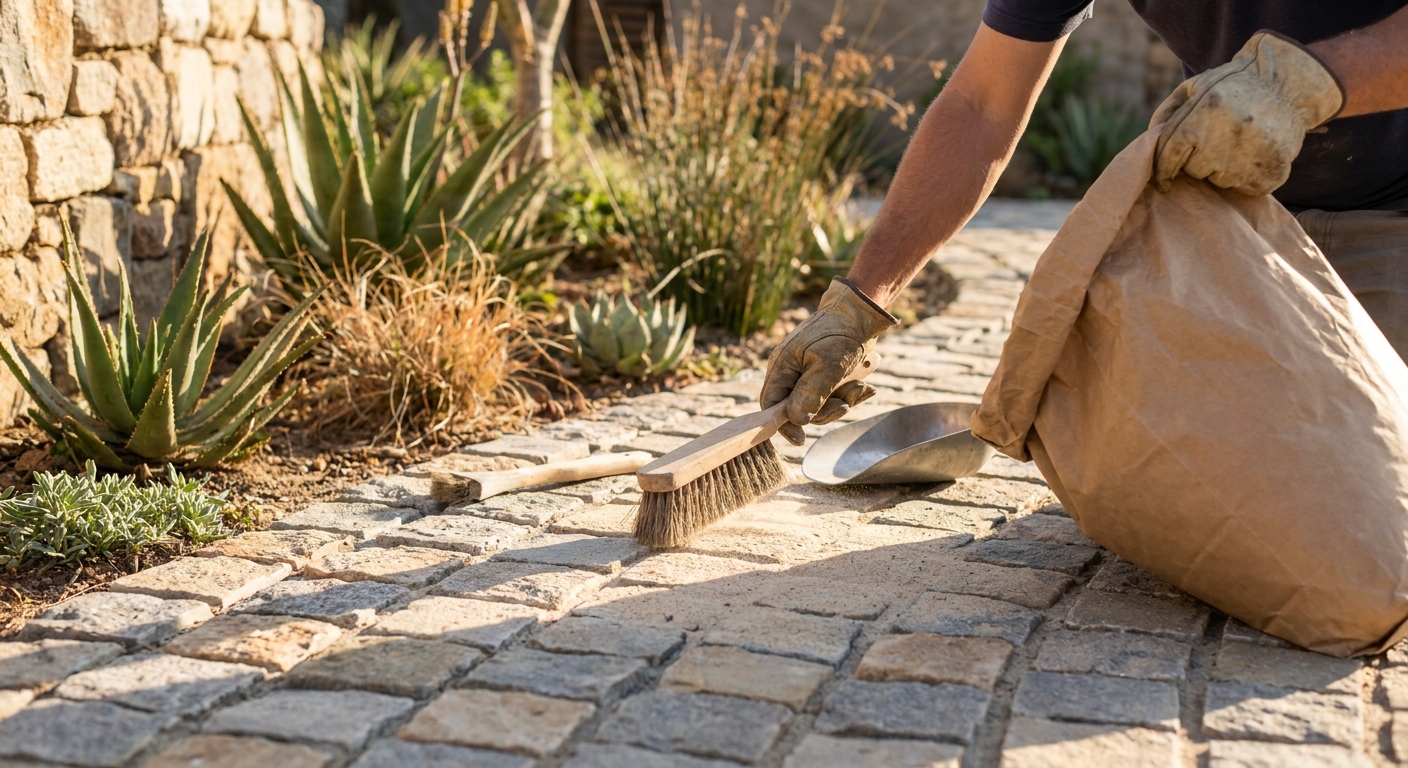

Kiln-dried silica sand and fine-graded plaster sand are the two most effective aggregates for creating a mechanical interlock in South African paving joints. While plaster sand offers a cost-effective solution for standard domestic driveways, kiln-dried silica sand is superior for drainage and weed suppression because of its uniform particle size. For areas subject to Highveld summer rainfall; which can exceed 100mm in a single storm event; we recommend a dry-mix of plaster sand and cement (a 10:1 ratio) to prevent joint erosion during heavy downpours.
Plaster Sand vs. Silica Sand for Paving Joints
Selecting the right material depends on your specific paving design, local climate exposure, and the width of your joints. To assist with your material selection, we have compiled a comparison of common sand types used in South African hardscaping projects.
| Sand Type | Joint Width | Drainage | Weed Resistance | Best Use Case |
|---|---|---|---|---|
| Plaster Sand | 2mm–5mm | Moderate | Low | Budget residential; flat driveways |
| Silica Sand | 1mm–3mm | Excellent | High | Premium patios; precision pavers |
| River Sand | >5mm | High | Low | Wide-gap flagstones; large cobbles |
| Polymer Sand | 2mm–6mm | High | Very High | Sloped surfaces; commercial bays |
How to Stop Paving Sand From Washing Away
Johannesburg and Gauteng installations face significant thermal expansion challenges, with temperatures often fluctuating by 20°C within a single 24-hour cycle. These shifts cause rigid mortar joints to crack, which is why we favor flexible sand-based solutions. To prevent erosion, particularly on sloped surfaces, we implement a semi-rigid barrier using a 10:1 sand-to-cement ratio. This ratio balances flexibility with durability, ensuring the material remains in place even when Highveld surface temperatures peak.
Sand-to-Cement Ratio for Joint Filling
Achieving structural stability requires that fine aggregates occupy the entire void between pavers to prevent moisture ingress. Standard building sand is often unsuitable because it contains oversized stones that bridge the gap, leaving empty pockets that lead to subsidence. When installing, we adhere to the following sequence:
- Dehydration: Ensure the paving surface is completely dry to prevent staining during application.
- Vibration: Use a plate compactor to force the sand into the lower depths of the joints.
- Activation: Sweep the surface clean and use a light misting if you have utilized a cement-based binder to trigger the hardening process.
Let us Handle Your Paving
Proper edge maintenance is just as vital as the sand itself. We recommend installing professional garden edging products to create a structural footprint that prevents lateral paver creep. If you are ready to scale your local visibility and ensure your paving project is built to code according to SANS 10109 standards, reach out to our team today using the button below to discuss your requirements.
FAQs
Which sand is best for filling paving joints in South Africa?
For most residential applications, kiln-dried silica sand is the best choice due to its ability to flow into tight joints and resist weed growth. In areas prone to high-intensity rainfall, a dry-mix of 10 parts plaster sand to 1 part cement is recommended to ensure the joints remain locked and resistant to wash-out.
Can I use building sand for joints?
No; building sand typically contains pebbles and clay impurities that prevent it from filling the full depth of the joint, which leads to early failure and paver shifting.
Why is my paving sand washing away?
South African summer storms often exceed the drainage capacity of loose sand. If you notice regular sand loss, your joints are likely not compacted sufficiently, or the slope of your driveway requires a stabilized sand-cement binder.
Should I use river sand?
River sand is generally too coarse for standard paving joints (which are usually 2mm-5mm). It should be reserved for projects involving large-format flagstones or decorative natural stone paths with wide gaps.
How often should joints be refilled?
We recommend an annual inspection of your paving. If you notice significant voids or loose sand, you should top up the joints to prevent mechanical movement; waiting too long can result in permanent misalignment of your pavers.