
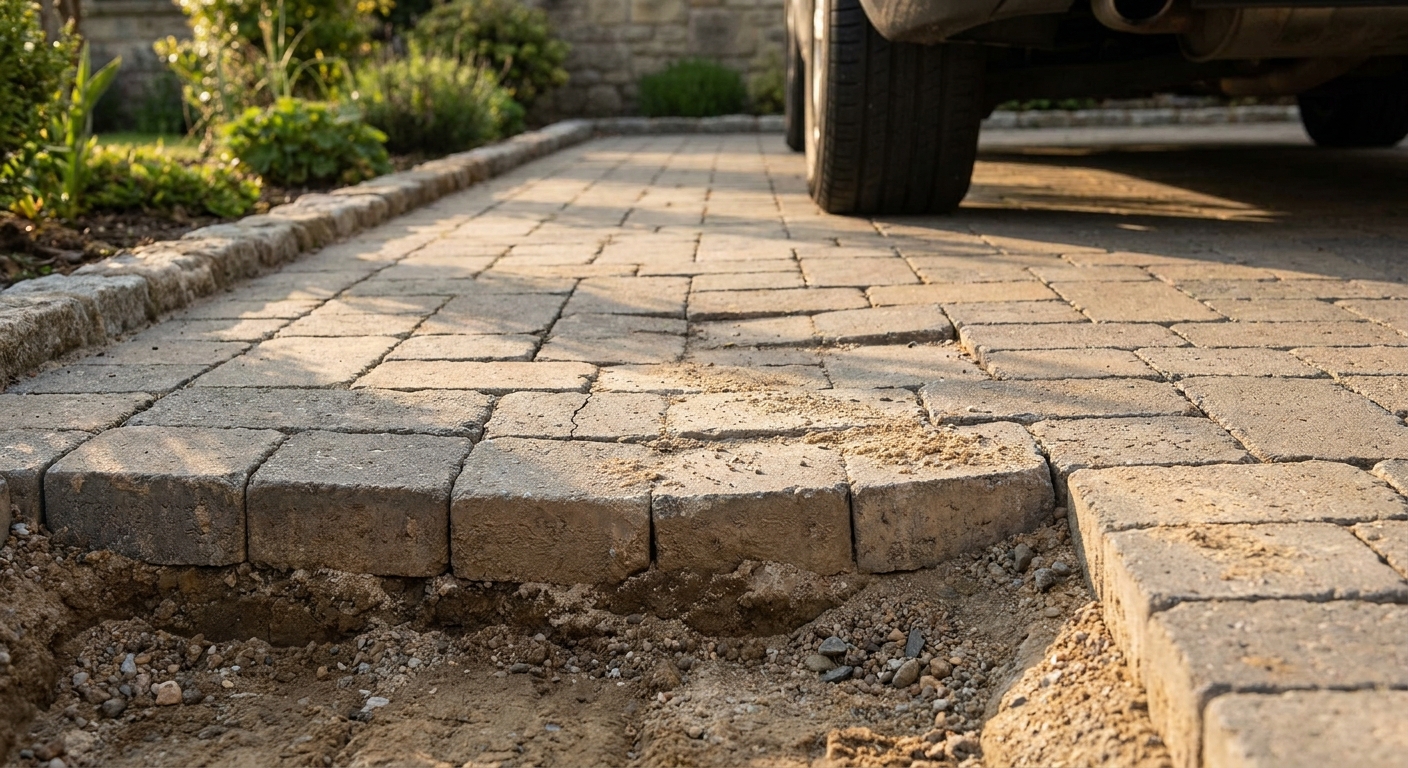

Paving sinks when the structural sub-base fails under concentrated vehicle weight. We find that this mechanical failure occurs when installers use inadequate bedding sand or omit high-density G5 crushed stone during the foundation phase. Understanding why your driveway paving sinks under vehicle weight is the first step in remediation. In our years of experience throughout the Gauteng region, we have observed that heavy seasonal rain saturates poorly compacted foundations, particularly in high-clay areas. Fixing this requires a disciplined approach to excavation and the installation of rigid edge restraints to prevent lateral displacement.
The Mechanics Of Sub-Base Failure
Vehicle weight exerts constant pressure on small surface areas. This force transfers through the bricks into the bedding sand and sub-base layers where structural integrity is determined. If these layers are too thin or poorly compacted, the material displaces downwards, creating a permanent dip.
Common technical oversights in driveway construction include:
- Failing to compact the sub-grade to 93 percent Mod AASHTO density.
- Using recycled building rubble that contains organic matter or degradable materials.
- Neglecting the installation of a geofabric membrane to separate soil layers.
Addressing these structural voids is the only way to prevent recurring depressions. If you are experiencing uneven terrain, our team offers specialized sub-base repair services to restore your driveway’s integrity.
Technical Impact Of Point Load And Drainage
Static loads from parked vehicles create sustained pressure on specific points of the driveway layout. Unlike foot traffic, car tyres concentrate hundreds of kilograms onto four small patches, which exceeds the shear strength of uncompacted sand. If water enters the joints and softens the base, the paving units will inevitably tilt and sink.
Critical failure indicators in high-traffic areas include:
- Visible vertical displacement of individual paving units along wheel tracks.
- Widening of joint gaps along the perimeter of the parking bay.
- Accumulation of silt or sand on the surface after heavy rainfall.
The Role Of Edge Restraint Integrity
Without rigid side support, paving blocks migrate outward under the weight of a turning vehicle because friction alone cannot hold them. This lateral creep creates gaps in the joints, allowing more water to penetrate the foundation. High-strength edging blocks prevent this spread by locking the entire surface into a single structural unit.
Soil Realities In The Gauteng Region
Properties in our region often sit on highly weathered granite or expansive clay soils. These materials expand when wet and shrink during dry periods or during infrastructure failures like water pipe bursts. Managing these shifts requires an engineered approach to soil preparation to avoid surface failure.
Sustainable driveway repairs follow this rigorous engineering sequence:
- Excavating the failed area to a depth of 300mm to reach stable earth.
- Backfilling with G5 material in layers of 100mm to ensure uniform density.
- Applying a thin layer of sharp sand to provide a stable bedding for the blocks.
Stop Watching Your Driveway Sink
Don’t let heavy vehicle weight ruin your home’s curb appeal or cost you thousands in future repairs. Without a solid, locked-in border, even the highest-quality paving blocks will shift, spread, and sink over time.
Installing Garden Cobble Edging provides the reinforced perimeter your driveway needs to contain sub-base materials, distribute heavy axle loads evenly, and prevent unsightly dipping for good. If you are ready to give your driveway a foundation that lasts, contact our team using the button below.
FAQs
Can I just pour more sand under the sunken bricks?
No; adding sand is a temporary fix that fails because it does not address the underlying sub-base compaction issues. The new sand will eventually displace or wash away under the same vehicle weight.
How deep should a driveway foundation be?
A residential driveway requires at least 150mm of compacted G5 sub-base topped with 20mm to 30mm of bedding sand. Heavily used areas or those with poor soil may require up to 300mm of structural fill.
Does load-shedding affect paving durability?
Indirectly; load-shedding interrupts automated drainage pumps and irrigation systems, leading to localised soil saturation. Excess water weakens the sub-base and accelerates the sinking process under heavy cars.
Why are my paving joints opening up?
Gaps appear when the edge restraints fail to hold the paving units together under lateral pressure. This allows the bricks to move apart, which leads to structural instability and eventual sinking.
Note: At Garden Cobble Edging, we have spent over a decade perfecting these drainage and compaction techniques across hundreds of successful projects in Johannesburg, ensuring every installation meets strict structural requirements.